


90-degree detection, 3-kilometer depth: How is the individual soldier radar reshaping the rules of tactical reconnaissance?
Release time:
2025-12-16
The system’s all-weather, full-time-domain surveillance capability represents its primary breakthrough. The system’s detection accuracy has reached a new high for tactical applications. Its multi-target tracking and identification capabilities can analyze and reveal the tactical patterns of targets, providing critical insights for command and decision-making.
In modern tactical operations, intelligence superiority determines life and death. Whether it’s border patrol, Tourist Area Human and Vehicle Defense , Prison Security Even in emergency rescue operations, comprehensive situational awareness of the surrounding environment is the cornerstone of mission success. However, traditional reconnaissance methods are facing increasingly severe challenges.
In complex terrain, visual observation by the naked eye is limited by field of view and visibility. Although night-vision equipment can overcome darkness, it cannot penetrate dense fog, rain, snow, or vegetation. Thermal imaging devices can detect living organisms, but they struggle to distinguish between humans and animals and are even less capable of providing precise distance and speed data.
Even more challenging is that many reconnaissance missions are time-sensitive and conducted in harsh environments, often requiring operators to complete the entire process—from equipment setup and target detection to data analysis—within just a few minutes. Traditional radar systems, with their bulky size, complicated deployment procedures, and high energy consumption, simply cannot meet the demands of individual soldiers or small teams for rapid mobility and covert operations.

This is it. Emerging in response to the times. One A radar detector with strong environmental adaptability and flexible model configurations. Solution — A soldier’s electronic detection system, condensed into equipment that one person can carry and deploy in just a few minutes.
When The “individual soldier radar” is moving from concept to reality, completely rewriting the rules of reconnaissance. This isn’t merely a matter of shrinking existing equipment—it’s a fundamental重构 of the entire reconnaissance paradigm. The RadarCan individual soldier radar is specifically optimized for extreme tactical environments. Its design is clear-cut: to deliver maximum battlefield awareness while minimizing size and weight.
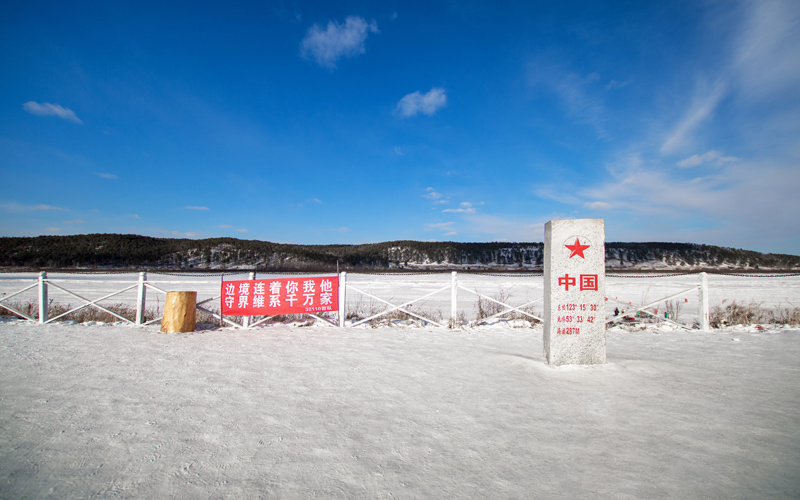
The system consists of detection devices, aggregation devices, and mobile terminals, among other components. It is an intelligent security system that integrates detection, sensing, and response into a single platform, featuring low power consumption, no external power dependency, long standby time, self-wake-up capability, rapid deployment, high reliability, and excellent stealth characteristics. , Can be deployed in key control areas such as mountain passes, corridors, and uninhabited islands. Used to prevent illegal border crossings, smuggling, infiltration, and other subversive activities.
The system can operate stably in complex electromagnetic environments, automatically filtering out clutter and interference to focus on the detection and tracking of genuine threat targets. Whether it’s a sniper lying in ambush or a high-speed vehicle, whether it’s ground personnel or small vessels on the water surface, the system can effectively identify and classify these objects and provide continuous trajectory information.

The core value of the individual soldier electronic detection system is reflected in several key dimensions:
All-weather, all-time-domain surveillance capability is the system’s primary breakthrough.
Whether it’s heavy rain, dense fog, darkness, or smoky conditions, radar waves can effectively penetrate these environments and provide stable, continuous target information. This means that adverse weather no longer poses an obstacle to reconnaissance. The “pause,” on the contrary, could become a “cover tune” for tactical maneuvers.

The system’s detection accuracy has reached a new high for tactical applications.
It can not only detect the presence of targets but also precisely provide azimuth, range, and velocity information for each target, forming a complete... “Flight Paths.” For tactical units that require precise fire guidance or operational planning, this level of data richness is a game-changer.
Multi-target tracking and recognition capabilities enable analysis and identification of target tactical patterns, providing critical insights for command and decision-making.
The system can simultaneously track dozens of targets of different types, automatically distinguishing between people, vehicles, and vessels, and assessing their intended movements.
More importantly, a single-person portable system that can be deployed in just three minutes—from being taken out of a backpack to becoming fully operational—takes less time than it takes to brew a cup of coffee yet is sufficient to establish complete control over an area spanning several square kilometers.

Application scenarios
( 1) The system deployed at a concealed location detected multiple nearshore moving targets at night, accurately distinguishing between fishing vessels, speedboats, and swimmers. It issued an early warning—15 minutes ahead of time—of potential landing points, enabling efficient deployment of defensive forces and successful interception.
( 2) Using individual soldier radar systems, the patrol team continuously monitored personnel activities within a 1.5-kilometer radius, even in dense fog with visibility below 50 meters. The system successfully identified and issued alerts about suspicious individuals attempting to cross the border—conditions under which traditional observation methods would have completely failed.
( 3) In emergency rescue scenarios, the individual soldier radar system also demonstrates its cross-domain application value. In earthquake-stricken areas, rescue teams used the system to rapidly scan rubble zones and successfully located multiple survivors trapped beneath collapsed buildings, increasing the efficiency of life detection by several times.

In the future, individual soldier radar systems will be further integrated with other reconnaissance methods. Effective upgrade Integration to form a multi-layered, multi-dimensional intelligence network.

Address:8th Floor, Building 20, Guanggu New Power, East Lake High-Tech Development Zone, Wuhan, 430205.
Telephone:+86 13343423376 / +86-027-65520251
E-mail:lkd@radardo.com



SAF Coolest v1.3.1.2 设置面板 ADSSX-AONN-OSSVE-ZEZ
无数据提示
Sorry, the current column is being updated, please look forward to it!
You can view other columns or returnHome Page