





Technical Analysis: Concept of Anti-Drone Radar Automatic Target Recognition Technology - Chapter One
Release time:
2024-11-29
In recent years, with the increasing threat of Low Slow Small (LSS) drones, the demand for counter-drone radar has become increasingly urgent. However, both in academia and practical applications, there are still issues in the research of counter-drone radar. With the emergence of various counter-drone radars, each claims to perform excellently in detecting drone radar echoes, and some systems have been purchased by clients and successfully deployed in critical facilities. Despite these advancements, certain governments remain cautious about the functionality and value of counter-drone radar, thus initiating some projects to verify the effectiveness of such systems.
In this context, this article aims to explore the application of Automatic Target Recognition (ATR) technology in the field of counter-drone radar. By analyzing and exploring existing counter-drone radar technologies from the perspective of ATR technology, key issues of the current technology are further studied. The discussion is divided into two aspects: target characteristics and detection technology.
1. The concept of radar detection is clarified, dividing it into two independent processes: 'signal detection' and 'target recognition', emphasizing that target recognition technology should not be limited to methods based on target tracking.
2. It is clearly pointed out that the main detection targets of counter-drone radar are LSS drone targets, which typically refer to small aerial objects with a radar cross-section (RCS) value of less than 2m², flying at speeds below 200 km/h, and operating below 1000 m altitude. According to existing quantitative classification standards, this mainly includes Group 1 & 2 categories of drones.
3. The performance levels of ATR are clearly defined, including four levels: 'Detection', 'Classification', 'Identification', and 'Description', and the differences between the two methods of 'track discrimination' and 'micro-Doppler recognition' are analyzed from the perspective of ATR technology.
4. Case studies demonstrate the effectiveness multiplier function of integrating ATR technology. ATR technology not only significantly enhances the detection range and recognition capability of drones but also further strengthens situational awareness. Ultimately, ATR technology is expected to upgrade traditional 3D counter-drone radar to a 4D radar system (providing 3D location and 1D attributes), thereby improving drone detection performance. The advancements in this technology indicate that the performance of counter-drone radar will be effectively enhanced in military, civilian, and commercial fields in the future.
1. Drone Threat
The threat of drones can be simply divided into threats to civilian facilities and threats to military targets. In dealing with drone threats, the former emphasizes management, while the latter emphasizes strikes, but the basic premise of both application scenarios remains effective, efficient, and accurate real-time detection of drone threats.
1.1 Civilian Aspect
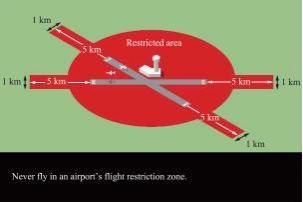
The 'black flight' of drones causing interference to the normal operation of civil aviation airports is a typical drone threat that has occurred frequently in recent years. One of the most notable cases is the drone 'black flight' incident at Gatwick Airport in London, UK. On the evening of December 19, 2018, drones were reported flying near Gatwick Airport, prompting airport authorities to suspend all flight operations as a precaution, which significantly affected over 140,000 passengers, leading to the cancellation of more than 1,000 flights and a 36-hour disruption of airport operations. This incident highlights the need for global airports to implement safety measures and strategies to guard against potential drone threats. In response, the UK government implemented several measures, including establishing a no-fly zone for drones within a 5 km radius.Counter-Unmanned Aerial Systems (C-UAS) solutions, including the Drone-Dome system developed by Israel. However, in 2019, another drone interference incident occurred at Gatwick Airport, indicating that the drone dome system is not a 100% reliable solution. Other factors may have contributed to this incident. For example, drone operators may have found ways to evade system detection and interference capabilities, or multiple operators may have been involved, making it difficult to locate and eliminate all drone threats.Note: Source https://register-drones.caa.co.uk/drone-code/where-you-can-fly.
(a) Runway airspace no-fly zone
(b) Gatwick Airport

Fig. 1 The 5 km drone no-fly zone at UK airports
*Statement: This article's copyright belongs to the author and is for academic sharing only,
and does not represent any position. If there is any infringement or objection, please contact the editor for deletion.
*声明:本文章版权属于作者,仅作为学术分享,不代表任何立场表达。如有侵权或异议,请联系小编删除。

Address:8th Floor, Building 20, Guanggu New Power, East Lake High-Tech Development Zone, Wuhan, 430205.
Telephone:+86 13343423376 / +86-027-65520251
E-mail:lkd@radardo.com



SAF Coolest v1.3.1.2 设置面板 ADSSX-AONN-OSSVE-ZEZ
无数据提示
Sorry, the current column is being updated, please look forward to it!
You can view other columns or returnHome Page